
India on Wednesday welcomed Foreign Direct Investment from China, saying that Chinese companies could take advantage of India's goal to increase the share of manufacturing in the economy from 16 per cent to 25 per cent by 2022.
Maharashtra Deputy Chief Minister Eknath Shinde concluded a two-day visit to the UK, focusing on attracting foreign direct investment and promoting the state's economic potential. His engagements included receiving leadership awards, meeting with sports figures like Virat Kohli to discuss Olympic aspirations, and appealing to British investors to bring technology and capital to Maharashtra, leveraging the India-UK FTA.

The outward foreign direct investment (FDI) by Indian companies stabilised in 2023-24 (FY24) after witnessing a fall in 2022-23 (FY23). The actual outward FDI inched up slightly to $13.75 billion in FY24 from $13.49 billion in the previous financial year (FY23), according to finance ministry data. This stability came after a sharp fall in outward flows in FY23 from $18.52 billion in 2021-22 (FY22).

Foreign direct investment in India has increased by about 35 per cent to $13.6 billion during the first half of 2013 with merger and acquisitions accounting for the bulk of inflows, says an UNCTAD report.

India has achieved its highest-ever annual Foreign Direct Investment (FDI) inflow of USD 94.53 billion in FY 2025-26, with cumulative FDI reaching USD 843 billion since 2014-15, announced Commerce and Industry Minister Piyush Goyal. Production Linked Incentive (PLI) schemes have also significantly boosted investment, production, exports, and job creation.

Indian companies had invested $7.34 billion.

The Indian Cabinet has approved Fairfax Financial Holdings' Rs 52,878 crore bid to acquire a 60.72 per cent stake in IDBI Bank, marking the country's largest foreign direct investment in the financial sector.

If India does get $100 billion a year in FDI, it would be a game-changer in every possible way. FPIs would come rushing back, AI or no AI, points out Debashis Basu.

'We are ready to help Prime Minister Modi achieve his vision of 100 per cent connectivity throughout India -- a vision all of our company, including Elon, shares,' Lauren Dreyer, vice-president of Starlink business operations at SpaceX, said at the pre-business day of the India Mobile Congress in New Delhi.

The guidelines say sellers will be solely responsible for warranties and guarantees.
Auto, tourism exceptions but major sectors otherwise saw decline in FY13 inflows.

The United Arab Emirates (UAE) has expressed intent to invest an additional $25 billion in India, with an ultimate goal of reaching $100 billion in investments, Union Minister Piyush Goyal announced. This comes as both nations plan to enhance cooperation in shipping, ports, energy, and emerging technologies, against a backdrop of expanding bilateral trade.

Finance Minister Nirmala Sitharaman announced that India is set to introduce a new, more investor-friendly bilateral investment treaty (BIT) framework, which is expected to receive Cabinet approval shortly, aiming to provide sharper protection for investors from both sides.

West Bengal could be the Bharatiya Janata Party's real test case of its business-friendly policies, points out Kanika Datta.

Indian foreign direct investment (FDI) in the United States has reached approximately USD 16.4 billion, supporting around 70,800 jobs and contributing significantly to research and development, according to US Deputy Undersecretary Brandon Remington.

India's Chief Economic Advisor V Anantha Nageswaran stated that the country's balance of payments (BoP) pressure is expected to remain a continuous challenge due to rising imports, commodity dependence, high global interest rates, and intense competition for capital.

Former Chief Economic Adviser Krishnamurthy V Subramanian outlines India's strategy to become a USD 55 trillion economy by 2047. The plan hinges on leveraging its young demographic in AI, dominating sunrise sectors like space and defence tech, attracting FDI, and achieving sustained 8% GDP growth.
That means making it easier to invest, protecting investors through predictable rules, and avoiding policy reversals after investments have been made, notes Rajeswari Sengupta.

India has attracted foreign direct investment (FDI) worth approximately 4,896 crore across 29 projects since May, following the government's relaxation of norms under Press Note 2 of 2026. The revised rules permit investment without government approval from entities with up to 10 per cent non-controlling ownership by land-bordering countries.

Finance Minister Nirmala Sitharaman stated that India is likely to sustain economic growth of 7 per cent or more in 2026-27, continuing the pace recorded since the Covid-19 pandemic, despite geopolitical uncertainties and supply-chain disruptions.
India has significantly improved its position as a global foreign direct investment (FDI) destination, climbing two places to 11th in 2025, with inflows surging by nearly 44 per cent to $38.89 billion, according to the United Nations Conference on Trade and Development (Unctad) World Investment Report 2026.

India's private sector capital expenditure is projected to reach approximately 3.2 trillion in the financial year 2026-27, up from 2.6 trillion in FY26, according to a Reserve Bank of India bulletin report, indicating sustained confidence despite global uncertainties.

Over Rs 180 crore was incurred on Prime Minister Narendra Modi's visit to 23 countries including the US, the UK, France, China and Japan in 2025, according to data shared by the government.

The Enforcement Directorate has seized Rs 3.45 crore in cash during searches against Karnataka PWD Minister Satish Jarkiholi, his family, and associates in a FEMA investigation. The probe concerns alleged undisclosed overseas investments, cross-border business links, and collection of bribes from PWD contractors, with the minister denying wrongdoing and alleging political targeting.
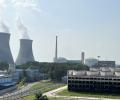
Atomic Energy Commission Chairman Ajit Kumar Mohanty announced that India's private sector is projected to invest Rs 7.5 lakh crore and contribute 30 GW towards the nation's goal of achieving 100 GW nuclear power capacity by 2047. This marks a significant policy shift, facilitated by the SHANTI Act, encouraging private participation in nuclear energy beyond the traditional public sector model. The country is also exploring Small Modular Reactors (SMRs) for industrial needs and advancing its three-stage nuclear power programme, leveraging its substantial thorium reserves.

'You have to get private investment to somewhere between 35% to 36% of GDP. It is hovering about 30%-31%.'

Emirates NBD Bank has successfully acquired a 60 per cent majority stake in RBL Bank through a primary capital infusion of approximately USD 2.75 billion, marking the largest foreign direct investment in India's banking sector.
The Finance Ministry has clarified that the decision to impose a 0.4% Merchant Discount Rate (MDR) on UPI transactions above Rs 2,000 was made independently, refuting claims of foreign influence. The ministry stated the policy aims to build a self-sustaining digital payments ecosystem, with MDR funding infrastructure and supporting small merchants.

Foreign Portfolio Investors (FPIs) have significantly increased their investment in Indian equities, infusing Rs 23,544 crore in August, driven by improving quarterly earnings, a stable rupee, and positive market prospects.

The Indian government has permitted Foreign Direct Investment (FDI) in an inventory-based e-commerce model exclusively for the export of domestically manufactured or produced goods, aiming to boost outbound shipments without affecting small local retailers.
India's balance of payments (BoP) recorded an $8.1 billion deficit in the first quarter of 2026-27 (Q1FY27), a significant increase from a $4.5 billion surplus in the corresponding period of the previous year, primarily driven by a sharp reversal in portfolio flows.

India's outward foreign direct investment (FDI) plummeted by 47.9 per cent year-on-year to $3 billion in June 2026, according to the Reserve Bank of India (RBI), with declines across equity, debt, and guarantee commitments.

Economists highlight that resolving domestic policy bottlenecks, particularly through land reforms and improving the ease of doing business, will be critical for Prime Minister Narendra Modi's 'next-generation reforms' and India's economic transformation towards its 'Viksit Bharat' vision for 2047.

"Pressure on the current account is a temporary problem. Sooner rather than later, our external sector will improve," said RBI Governor Sanjay Malhotra.

Reliance Industries Ltd (RIL) has publicly welcomed competition from Elon Musk's Starlink in the satellite communications sector, asserting that all players, including Jio, must abide by Indian laws and policies.
India's net foreign direct investment (FDI) surged more than fourfold to $6.58 billion in April 2026, driven by a significant increase in equity inflows and reduced repatriation by foreign investors, according to the Reserve Bank of India (RBI).

Finance Minister Nirmala Sitharaman announced that the Goods and Services Tax (GST) Council's October 7 meeting will focus on 'GST 2.0' process reforms, including e-invoicing and input tax credit rules, while also addressing complex issues surrounding the taxation of the digital economy and cryptocurrency.

Former Bangladesh Prime Minister Sheikh Hasina has strongly criticised Prime Minister Tarique Rahman's decision to skip the BRICS summit in India, calling it "immature" and detrimental to Bangladesh's national interest. She argued that the absence lost opportunities for economic development and that foreign policy should not be driven by personal considerations. Hasina also highlighted the current "grave national crisis" in Bangladesh and her intention to return to restore democracy.

The data may include details of foreign bank accounts, investment accounts, certain financial investments, interest income, dividends and other specified financial income held by Indian tax residents abroad.

DIIs invested $22.8 billion in Indian equities in Q2CY26.
